Make studying simple
How to Study
As a recent GCSE graduate, I share my personal tips and tricks to help fellow students stay motivated, simplify studying, and achieve top grades. Join me on this educational journey to make learning enjoyable and effective!
8/26/20252 min read


Let's start with my personal favourite technique, blurting.
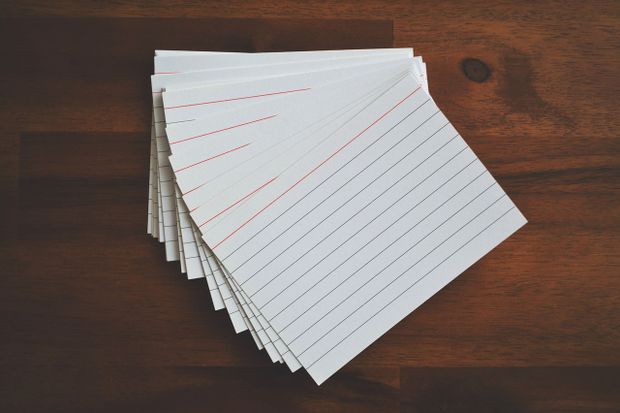
Think of flashcards like tiny, turbocharged study bites. Each card is a focused challenge: a prompt on one side, the answer on the other. Instead of passively re-reading notes or highlighting like you’re decorating a textbook, flashcards force your brain to reach and retrieve — and that reaching is where the magic happens. When you actively recall an answer, you strengthen the memory path, making it faster and more reliable next time.
This method was super useful when preparing for my last exams. Me and my friends would use this technique all the time, and having others there to test you makes the experience way more enjoyable. This is a great memory strategy especially if you choose to use study groups, because, although it isn't essential, working with others is always more fun than working alone. I would definitely recommend giving this a try, because it could be the perfect method for you.
Flashcards: the study sidekick that actually works
Blurting is a very common technique used to actively remember information. This can be notes you took in class, a paragraph from a book, or even something from a youtube video.
Well I suppose you would like to know how to use this technique. It is, actually, very simple. All you will need is two different colour pens, a sheet of paper, and maybe a highlighter (although, this is optional).
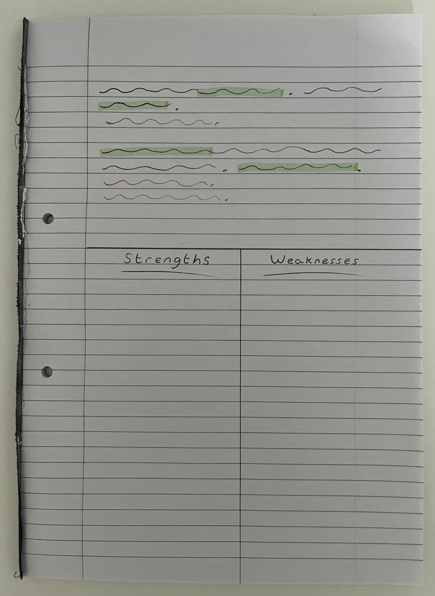
First, you should start by reading your notes, or whatever it may be that you would like to remember. Spend 10-20 minutes doing this. Next put the information away, out of sight, and begin writing everything you can remember on your sheet of paper. Again I would suggest doing this for 10-20 minutes, but take aslong as you need. Leave gaps between lines for later. Once you have finished, bring out your source of information, a different colour pen. You can use a highlighter to outline everything you have gotten correct. Compare your notes to your source, and inbetween lines, in your other pen, write everything you missed, or got wrong.
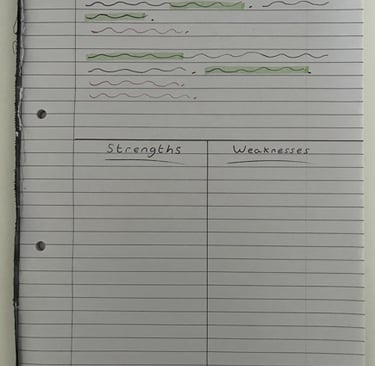
As you can see in the image above I have drawn two more sections on the page. Here you can write your strengths and weaknesses so you know what you are good at, and what parts you need to revisit.